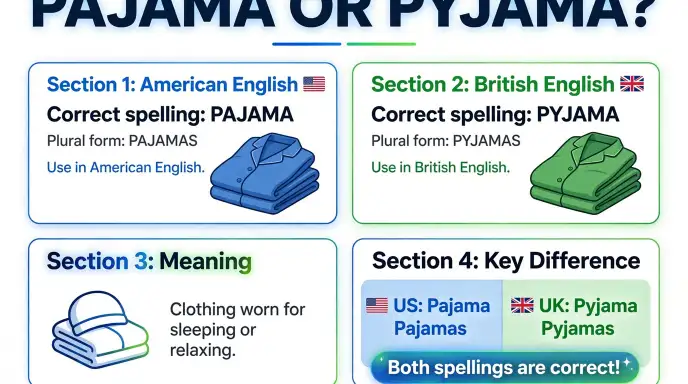
Pajama and pyjama are both correct spellings of the same word. Pajama is the standard spelling in American English, while pyjama is commonly used in British English and many other countries. Both words refer to soft, loose clothes worn for sleep or rest.
People often search for “pajama or pyjama” because they see both spellings in books, clothing stores, online shops, and everyday writing. This can make it hard to know which form to choose. The good news is that neither spelling is wrong. The main difference is regional spelling.
Knowing which form to use can help you write clearly and keep your spelling consistent. If you are writing for readers in the United States, pajama is usually the best choice. For readers in the United Kingdom, pyjama is more common. Both forms are easy to understand around the world.
In this guide, you will learn the meaning, origin, spelling rules, and everyday uses of these words. You will also see examples, common mistakes, and tips to help you choose the right spelling for your audience.
Pajama or Pyjama – Quick Answer
Pajama is the preferred American English spelling, while pyjama is the usual British English spelling. Both have the same meaning.
Examples:
- American English: I bought a new pair of pajamas.
- British English: I bought a new pair of pyjamas.
- International use: She changed into her pajamas before bed.
The spelling you choose depends on your audience and the type of English you are using. Neither version changes the meaning of the word.
Definition and Meaning of Pajama or Pyjama
A pajama or pyjama is a piece of clothing worn for sleeping or relaxing at home. The word often refers to a matching set that includes a top and trousers.
These clothes are usually made from soft materials, such as cotton, silk, flannel, or jersey. They can be light for warm weather or thick for cold nights.
What Does Pajama Mean?
In American English, pajama is the standard spelling. The plural form, pajamas, is widely used when talking about sleepwear.
Example: He put on his pajamas before going to bed.
What Does Pyjama Mean?
In British English, pyjama is the common spelling. The plural form is pyjamas.
Example: She wore warm pyjamas on the cold winter night.
Do Pajama and Pyjama Mean the Same Thing?
Yes. Both words describe the same type of sleepwear. The difference is in spelling, not meaning, pronunciation, or purpose.
The words may also appear in terms such as pajama set, pyjama bottoms, pajama party, and pyjama day. The preferred form can depend on the country and local style.
The Origin of Pajama or Pyjama
The word pajama comes from the Hindi and Urdu word pāyjāma, which refers to leg clothing or trousers. The word has Persian roots and is linked to clothing worn in South Asia.
Traditional garments of this kind were loose trousers tied around the waist. Over time, the term became associated with sleepwear in English.
During the colonial period, the word entered British English. People in Britain adopted the clothing and the name, and the term later spread to other English-speaking countries.
The two spellings developed through different spelling conventions:
- Pyjama: The traditional spelling used in British English.
- Pajama: The spelling that became standard in American English.
English often has different spellings for the same word. For example, British English uses colour, while American English uses color. The difference between pyjama and pajama follows a similar pattern.
British English vs American English Spelling
The main difference between these words is the letter y in the British form and the letter a in the American form.
British English generally uses pyjama and pyjamas. American English generally uses pajama and pajamas.
| Feature | American English | British English |
| Singular spelling | Pajama | Pyjama |
| Plural spelling | Pajamas | Pyjamas |
| Common phrase | Pajama party | Pyjama party |
| Trousers | Pajama pants | Pyjama bottoms |
| Sleepwear set | Pajama set | Pyjama set |
| Correct usage | Yes | Yes |
Examples of American English
- I need to buy new pajamas.
- The store sells cotton pajama sets.
- The children had a pajama party.
Examples of British English
- I need to buy new pyjamas.
- The shop sells cotton pyjama sets.
- The children had a pyjama party.
Both versions are correct. The best choice depends on the spelling style used in the rest of your writing.
Which Spelling Should You Use?
Your choice should depend on where your readers live and which English spelling style you follow.
Use Pajama for American Readers
Choose pajama or pajamas when writing for an American audience. This form is common in US books, websites, clothing stores, and everyday communication.
Example: Our new pajama collection is available online.
Use Pyjama for British Readers
Choose pyjama or pyjamas when writing for readers in the United Kingdom. This spelling also appears in many other countries that follow British English conventions.
Example: Our new pyjama collection is available online.
What About International Writing?
For a global audience, either spelling can work. However, you should choose one form and use it consistently.
If your website mainly targets American readers, use pajama. If your content is written in British English, use pyjama.
For , consider the spelling your target audience is likely to search for. You can also use related variations naturally in your content when they help readers.
Common Mistakes with Pajama or Pyjama
Although both spellings are correct, writers can make a few common mistakes.
1. Thinking One Spelling Is Wrong
Some people believe pyjama is incorrect because they are used to American English, or they think pajama is wrong because they follow British English.
Correction: Both spellings are correct in their respective varieties of English.
2. Mixing Both Spellings in One Article
Using pajamas in one paragraph and pyjamas in the next can make your writing look inconsistent.
Correction: Follow one spelling style throughout the article unless you are directly comparing the two forms.
3. Using the Wrong Regional Form
A US clothing website that uses pyjama bottoms may sound less familiar to some American readers. A British website using pajama pants may seem less natural to local readers.
Correction: Use the terms your target audience knows best.
4. Confusing Singular and Plural Forms
Writers sometimes use the wrong form when describing one item or a complete set.
Correction: Use pajama or pyjama for the singular form and pajamas or pyjamas for the plural form. In common usage, the plural often refers to the full set of sleepwear.
5. Assuming the Meaning Changes
The different spelling does not create a different type of clothing.
Correction: Both words refer to sleepwear. The difference is regional spelling.
Pajama or Pyjama in Everyday Examples
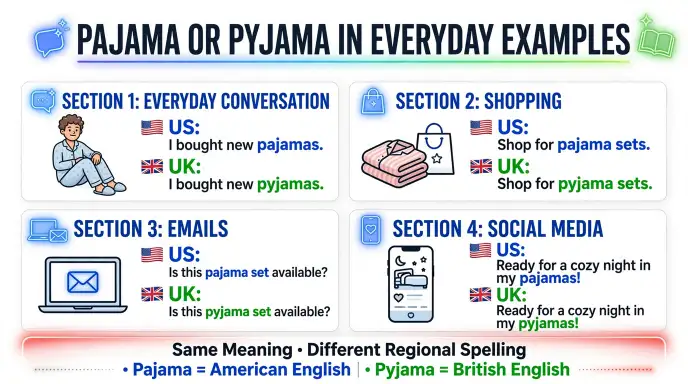
These words appear in casual conversations, shopping, emails, social media, and other types of writing.
1. Everyday Conversation
- I forgot to pack my pajamas.
- She bought a new pair of pyjamas.
- The baby needs clean pajamas for tonight.
2. Emails
American English:
“Hello, I would like to ask if the blue pajama set is available in a medium size.”
British English:
“Hello, I would like to ask if the blue pyjama set is available in a medium size.”
3. News and Articles
- The company has launched a new line of cotton pajamas.
- The charity organised a pyjama day to raise money for children.
4. Social Media
- Ready for a cozy night in my new pajamas!
- Sunday mornings are better in soft pyjamas.
5. Formal and Professional Writing
- The retailer offers a range of cotton pajama sets for adults.
- The shop has introduced a new collection of children’s pyjamas.
The spelling should match the intended audience. Both forms are suitable for professional writing when used according to the relevant English convention.
Pajama or Pyjama – Google Trends & Usage Data
The popularity of pajama and pyjama varies by country because English spelling conventions differ across regions.
In the United States, pajama is the standard spelling. Searches and shopping terms often include phrases such as pajamas, pajama pants, and pajama sets.
In the United Kingdom, pyjama is more common in standard British usage. Search terms often include pyjamas, pyjama bottoms, and pyjama sets.
Other countries may use either form, depending on their English education, local publishing practices, and exposure to American or British media.
Google Trends can help compare search interest in the two spellings over a selected period and across different countries. However, search interest is not the same as total word usage or clothing sales. Results can also change based on the selected region, date range, and search category.
You can compare the two terms directly using .
For , use the spelling that matches your main audience. Include the alternative form naturally when it is relevant, rather than repeating both words unnecessarily.
Pajama vs Pyjama: Comparison Table
| Comparison point | Pajama | Pyjama |
| Main region | United States | United Kingdom |
| Part of speech | Noun | Noun |
| Singular | Pajama | Pyjama |
| Plural | Pajamas | Pyjamas |
| Meaning | Sleepwear | Sleepwear |
| Correct spelling | Yes | Yes |
| Best for US content | Yes | Usually no |
| Best for UK content | Usually no | Yes |
The table shows that the words have the same meaning but follow different regional spelling conventions.
Frequently Asked Questions
1. Is pajama or pyjama correct?
Both are correct. Pajama is standard in American English, while pyjama is standard in British English.
2. Is pyjama British or American?
Pyjama is the usual British English spelling. American English generally uses pajama.
3. Why do Americans spell it pajama?
American English adopted the spelling pajama as its standard form. British English retained the spelling pyjama.
4. Is it pajamas or pyjamas?
Both forms are correct. Use pajamas for American English and pyjamas for British English.
5. Do pajama and pyjama have different meanings?
No. Both words refer to sleepwear. The difference is regional spelling, not meaning.
6. Which spelling should I use for ?
Use pajama for content targeting the United States and pyjama for content targeting the United Kingdom. Match your spelling to your audience’s search habits.
7. Is pyjamas used in Australia?
Yes. Pyjamas is commonly used in Australian English, which generally follows British spelling conventions for this word.
Conclusion
Pajama and pyjama are two correct spellings of the same word. Both describe clothing worn for sleeping or relaxing, and neither spelling changes the meaning.
The main difference is regional. American English uses pajama and pajamas, while British English generally uses pyjama and pyjamas. Other English-speaking countries may follow British conventions or use forms influenced by American English.
When choosing between the two, think about your audience. Use pajama for American readers and pyjama for British readers. For international websites, select one spelling style and keep it consistent across your pages, product descriptions, emails, and articles.
Writers and website owners should also consider local search habits. A spelling that feels natural to readers is often the better choice for clear communication. You can check Google Trends to compare search interest in different regions, but avoid treating search data as a complete measure of word usage.
Learn More About English!

Hi, I’m Olivia Bennett, an English grammar and spelling content writer. I enjoy exploring confusing words, spelling differences, and everyday language questions. My goal is to share clear, simple, and helpful explanations that make English easier to understand.







