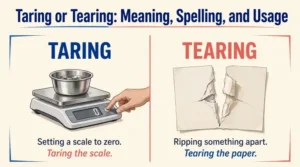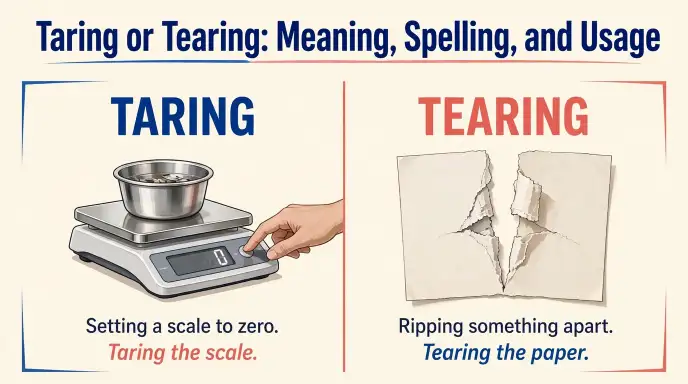
Taring and tearing are both real words, but they have different meanings. Taring comes from the verb tare, which means to set a scale to zero or remove the weight of a container. Tearing comes from tear and can mean ripping something or producing tears when crying.
People often search for taring or tearing because the words look and sound similar. However, you cannot use them in the same way. Choosing the wrong form can change the meaning of a sentence.
The difference becomes clear when you look at the base verbs. A cook may be taring a kitchen scale before weighing flour. A child may be tearing a sheet of paper into pieces. One word relates to weighing, while the other relates to ripping or crying.
This guide explains both spellings, their meanings, origins, and correct use. You will also find simple examples, common mistakes, and practical advice to help you choose the right word.
Taring or Tearing: Quick Answer
Taring is the -ing form of tare, meaning to set a weighing scale to zero or account for a container’s weight. Tearing is the -ing form of tear, meaning to rip something or produce tears while crying.
- Taring: She is taring the scale before weighing the flour.
- Tearing: He is tearing the paper into small pieces.
- Tearing: The sad film is making her eyes water.
Use taring for weighing and tearing for ripping or crying.
What Do Taring and Tearing Mean?
The two words come from different verbs. Their meanings depend on the action in the sentence.
What Does Taring Mean?
Taring is the present participle of tare. In weighing, a tare is the weight of an empty container or packaging. To tare a scale means to remove that weight from the measurement.
For example, imagine placing an empty bowl on a kitchen scale. You press the tare button, and the display returns to zero. You can then add flour and measure only the flour’s weight.
Examples:
- I am taring the scale before adding the ingredients.
- The worker is taring the weighing machine.
- She finished taring the container before measuring the rice.
The word is most common in cooking, shipping, laboratories, retail, and other settings where people measure weight.
What Does Tearing Mean?
Tearing is the present participle of tear. This verb has two common meanings.
1. To rip or split something
Use this meaning when something breaks or comes apart.
Examples:
- He is tearing the old paper.
- The dog is tearing the cushion.
- She is tearing the wrapping paper.
2. To produce tears when crying
The verb tear can also describe water coming from the eyes.
Examples:
- Her eyes are tearing because of the smoke.
- He was tearing up during the film.
- Cold wind is making my eyes tear.
The sentence tells you which meaning applies. In both cases, the correct spelling is tearing.
The Origin of Taring and Tearing
The words have different histories because they come from different base verbs.
Origin of Taring
Taring comes from tare, a word used in weighing. The word tare entered English through French and has roots in Arabic, where it referred to a deduction or reduction in weight.
In modern use, tare describes the weight of packaging or a container. The verb tare means to subtract that weight from the total measurement.
Adding -ing creates taring:
- Tare
- Taring
- Tared
For example: “The shop assistant is taring the scale.”
Origin of Tearing
Tearing comes from the verb tear, which means to rip or pull something apart. This word has Old English roots.
English also uses tear for the drops of water that come from the eyes. This word has a different history from the verb meaning to rip, even though both are spelled the same.
The spelling changes when the verb takes -ing:
- Tear
- Tearing
- Tore
- Torn
The final e disappears before the -ing ending. That is why tearing is correct, not teareing.
British English vs. American English
There is no British and American spelling difference between taring and tearing. Both forms use the same spelling in the UK, the US, Canada, and Australia.
The meanings also remain the same across these regions.
| British English | American English | Example |
| Taring | Taring | She is taring the scale. |
| Tearing | Tearing | He is tearing the paper. |
| Tared | Tared | The scale was tared before use. |
| Tore | Tore | She tore the envelope. |
| Torn | Torn | The page is torn. |
Regional Usage
The spelling stays the same, but context can affect how often readers see each word.
- United States: Both words appear in everyday and technical writing.
- United Kingdom: Both forms are standard.
- Canada: The spellings and meanings remain the same.
- Australia: Both words follow the same spelling rules.
Style guides do not normally require different spellings for these words. Writers should choose the form that matches the intended meaning.
Which Version Should You Use?
Your choice depends on the action you want to describe. There is no need to choose one spelling based on your country.
United States
Use taring when setting a scale to zero. Use tearing when describing ripping or crying.
Example: “I am taring the scale before weighing the package.”
United Kingdom
Follow the same rule. British English uses both spellings with the same meanings.
Example: “The child is tearing a page from the notebook.”
Canada
Canadian writers also use both forms. Choose the spelling based on the verb, not regional preference.
Australia
Use taring for weighing and tearing for ripping or crying. Neither word is a regional spelling variant of the other.
International Writing
For a global audience, explain the action clearly when using taring. Some readers may be less familiar with this technical term.
Academic Writing
Use taring in scientific or technical instructions about weighing equipment. Use tearing when describing physical damage or tears from the eyes.
Business Writing
In shipping, packaging, and retail, taring may describe setting a scale to exclude packaging weight. In general business writing, use tearing only when you mean ripping or crying.
Common Mistakes with Taring and Tearing
Writers often confuse these words because they have similar letters and sounds. The easiest way to avoid mistakes is to check the base verb.
| Incorrect sentence | Correct sentence | Explanation |
| She is tearing the scale before weighing flour. | She is taring the scale before weighing flour. | Taring means setting the scale to zero. |
| He is taring the paper in half. | He is tearing the paper in half. | Tearing means ripping something. |
| The child is taring the wrapping paper. | The child is tearing the wrapping paper. | The action involves ripping. |
| I am tearing the kitchen scale. | I am taring the kitchen scale. | The scale needs to be zeroed. |
| Her eyes are taring from the smoke. | Her eyes are tearing from the smoke. | Tearing can describe watery eyes. |
Common Spelling Errors
Avoid these forms:
- Teareing: Incorrect. The correct spelling is tearing.
- Tareing: Incorrect. The correct spelling is taring.
- Tared: Correct past form of tare.
- Tore: Correct past form of tear when it means rip.
- Torn: Correct past participle of tear when it means rip.
Easy Memory Tip
Think about the base verb:
- Tare = scale. Add -ing to get taring.
- Tear = rip or cry. Add -ing to get tearing.
If the sentence is about a weighing scale, choose taring. If it describes ripping or watery eyes, choose tearing.
Taring and Tearing in Everyday Examples
These words appear in different situations. The examples below show how to use each one naturally.
In Emails
Taring:
“Please tare the scale before measuring each package.”
“Could you confirm that the weighing machine is taring correctly?”
Tearing:
“I noticed that the document is tearing near the edge.”
“Please avoid tearing the labels when opening the package.”
In Business Writing
Taring:
“The operator is taring the machine before weighing the goods.”
“Staff must tare the scale before adding products to the container.”
Tearing:
“The packaging is tearing during transport.”
“The damaged boxes are tearing open at the seams.”
In News Headlines
Taring:
“New Digital Scales Make Taring Easier for Shop Owners”
Tearing:
“Strong Winds Leave Roofs Damaged and Tearing Across the Region”
The second example uses tearing to describe material being pulled apart.
In Blogs
Taring:
“Learn how taring a kitchen scale can help you measure ingredients more accurately.”
Tearing:
“Find out why paper keeps tearing and how to handle it without damage.”
On Social Media
Taring:
“Quick cooking tip: tare your scale before adding flour.”
Tearing:
“My cat keeps tearing the paper bags. I need to hide them!”
In Academic Writing
Taring:
“The researcher began by taring the digital balance before measuring each sample.”
Tearing:
“The test showed that the material was tearing under pressure.”
In Daily Conversation
Taring:
“Are you taring the scale before adding the bowl?”
“Yes, I am setting it to zero first.”
Tearing:
“Why are you tearing that paper?”
“I need a smaller piece.”
These examples show that the correct word depends on the action, not the country or writing style.
Taring or Tearing: Google Trends and Modern Usage
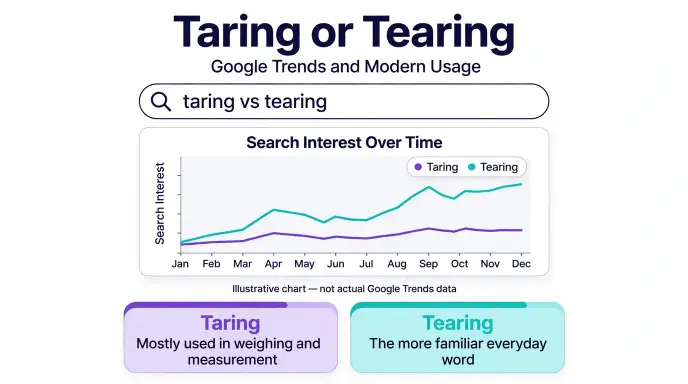
People may search for these spellings when checking a sentence, writing instructions, or learning the correct form of a verb.
The two words do not have equal everyday use. Tearing appears in many common situations because it can describe ripping, damage, and crying. Taring is more specialized and usually appears in weighing, cooking, shipping, and laboratory work.
Why Do People Search for These Words?
Common reasons include:
- They are unsure how to spell the -ing form of tare.
- They confuse taring with tearing.
- They are writing instructions for a digital scale.
- They want to describe paper, fabric, or packaging being ripped.
- They are learning English verb forms.
Regional Search Interest
Both spellings are used in British, American, Canadian, and Australian English. There is no established regional spelling preference that changes the correct form.
Exact search popularity can change over time. Without a verified Google Trends comparison, it would not be accurate to claim that one country searches for either spelling more often.
For everyday readers, tearing is likely to feel more familiar because it has several common uses. Taring is useful in specific situations involving weight and measurement.
Quick Comparison Table
| Version | Meaning | Correct? | Region | Example |
| Taring | Setting a scale to zero | Yes | All English varieties | She is taring the scale. |
| Tearing | Ripping something | Yes | All English varieties | He is tearing the paper. |
| Tearing | Producing tears | Yes | All English varieties | Her eyes are tearing. |
| Teareing | Incorrect spelling | No | None | Use tearing instead. |
| Tareing | Incorrect spelling | No | None | Use taring instead. |
Key Takeaways
- Taring comes from the verb tare.
- It means setting a scale to zero or removing container weight from a measurement.
- Tearing comes from the verb tear.
- It can mean ripping something or producing tears when crying.
- Both spellings are correct, but they have different meanings.
- British and American English use the same forms.
- Check the action in your sentence before choosing the word.
FAQs About Taring and Tearing
1. Is taring a real word?
Yes. Taring is the present participle of tare. It is used when someone sets a weighing scale to zero or removes the weight of a container from a measurement. For example, “She is taring the scale before weighing the flour.”
2. Is tearing the correct spelling?
Yes. Tearing is the correct -ing form of tear. It can mean ripping something apart or producing tears in the eyes. For example, “He is tearing the paper” and “Her eyes are tearing.”
3. What is the difference between taring and tearing?
Taring relates to weighing and scales. Tearing relates to ripping or crying. The words come from different base verbs, so they cannot replace each other. Choose the spelling that matches the action in your sentence.
4. How do you use taring in a sentence?
You can use taring when someone sets a scale to zero before weighing an item. For example: “The shop assistant is taring the scale before weighing the vegetables.” It is common in cooking, retail, shipping, and laboratory settings.
5. Why is tearing spelled without the final e?
The verb tear drops its final e before the -ing ending. This creates tearing. The same spelling rule appears in words such as making from make and writing from write.
6. Is taring used in British English?
Yes. British English uses taring with the same meaning as American English. It refers to setting a weighing scale to zero or accounting for the weight of an empty container.
7. What is the past tense of taring?
The past tense of tare is tared. For example: “She tared the scale before weighing the ingredients.” The past forms of tear, meaning rip, are tore and torn.
8. Can tearing mean crying?
Yes. Tearing can describe eyes producing tears. For example: “My eyes are tearing because of the smoke.” It can also mean ripping something, so the surrounding words help explain the intended meaning.
Conclusion
The difference between taring or tearing is simple once you know their base verbs. Taring comes from tare and relates to weighing. It describes setting a scale to zero or removing the weight of an empty container. Tearing comes from tear and describes ripping something or producing tears in the eyes.
Both words are correct in British and American English. Neither is a regional spelling variation of the other. The right choice depends on the action you want to describe.
When writing about kitchen scales, packages, or measurements, use taring. When describing damaged paper, ripped fabric, or watery eyes, choose tearing.
Remember this simple rule: tare means weighing, while tear means ripping or crying. Check the meaning before you write, and you can avoid this common spelling mistake.
Explore Word Differences!

I’m Ethan Carter, a grammar-focused writer and English language enthusiast at SpellGrammar. I enjoy explaining confusing words, spelling differences, and grammar rules in clear, simple language. My goal is to help readers write with greater accuracy and confidence in everyday and professional English.