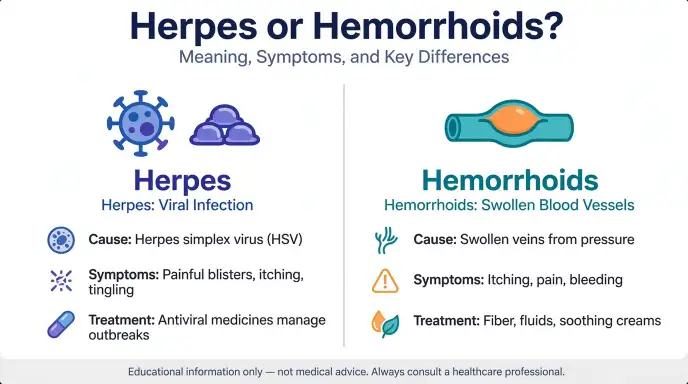
Herpes and hemorrhoids are two different conditions that affect different parts of the body, although both can cause discomfort near the genital or anal area. People often search for herpes or hemorrhoids because they notice pain, itching, bumps, or sores and want to understand what these signs may mean. Knowing the difference can help you choose the right next step.
Herpes is a viral infection caused by the herpes simplex virus (HSV). It can cause painful blisters or sores around the mouth, genitals, or anus. Hemorrhoids, also called piles, are swollen blood vessels in or around the anus and lower rectum. They may cause itching, swelling, pain, or bleeding during bowel movements.
The main difference is the cause: herpes results from a viral infection, while hemorrhoids involve swollen blood vessels. Their symptoms can sometimes overlap, so appearance alone may not confirm the cause.
This guide explains the meaning of both terms, their origins, common signs, and how people use them in everyday language. It also covers common mistakes and answers frequently asked questions. If you have new sores, unexplained bleeding, or ongoing pain, a healthcare professional can help identify the cause and recommend proper treatment.
Herpes or Hemorrhoids – Quick Answer
Herpes is a viral infection that can cause clusters of blisters or painful sores. Hemorrhoids are swollen blood vessels near the anus or inside the rectum.
Although both conditions may cause discomfort around the anal area, they are not the same.
| Feature | Herpes | Hemorrhoids |
| Main cause | Herpes simplex virus | Swollen blood vessels |
| Common signs | Blisters, sores, tingling, or pain | Itching, swelling, pain, or bleeding |
| Common location | Mouth, genitals, or anus | Inside or around the anus |
| Contagious? | Yes, through direct contact | No |
| Treatment | Antiviral medicines can help | Fiber, fluids, creams, or medical procedures, depending on severity |
Example: Painful blisters near the anus may be a sign of herpes, while a swollen lump or bright red blood after a bowel movement may occur with hemorrhoids. However, other conditions can cause similar symptoms.
If you notice new sores or unexplained rectal bleeding, seek medical advice rather than relying on appearance alone.
Definition and Meaning of Herpes or Hemorrhoids
What Does Herpes Mean?
Herpes is an infection caused by the herpes simplex virus. The two main types are HSV,1 and HSV,2. Both can affect the mouth or genital area.
Common signs may include:
- Small, painful blisters or open sores.
- Itching, burning, or tingling.
- Pain when urine touches sores.
- Repeated outbreaks in some people.
Some people have mild symptoms or no visible signs. Herpes can spread through direct skin,to,skin contact, including sexual contact. It can spread even when visible sores are absent.
What Do Hemorrhoids Mean?
Hemorrhoids are swollen veins in the lower rectum or around the anus. Many people call them piles.
They fall into two main types:
- Internal hemorrhoids: These form inside the rectum. They often cause painless bleeding.
- External hemorrhoids: These form under the skin around the anus. They may cause itching, swelling, or pain.
Straining during bowel movements, constipation, and pregnancy can increase the risk of hemorrhoids.
Simple Meaning and Context
The words describe separate health conditions. Doctors use herpes when discussing a viral infection and hemorrhoids when discussing swollen blood vessels.
For example, a person may ask about herpes after noticing genital sores. Another person may ask about hemorrhoids after seeing blood on toilet paper. Both situations may need medical assessment, but the causes and treatments differ.
The Origin of Herpes and Hemorrhoids
Origin of the Word Herpes
The word herpes comes from the ancient Greek word herpein, which means “to creep” or “to crawl.” The name relates to the way some skin sores appear or spread across an area.
Medical writers used the term for skin conditions long before modern science identified the viruses that cause herpes. Today, doctors use it mainly when discussing infections caused by herpes simplex viruses and certain related viral conditions.
Origin of the Word Hemorrhoids
The word hemorrhoids comes from Greek roots linked to blood flow. The term entered English through Latin and French medical language.
In everyday British English, people often say piles. In medical writing, hemorrhoids and haemorrhoids refer to the same condition. The difference between these two spellings comes from regional spelling conventions, not from a difference in meaning.
British English vs American English Spelling
The words herpes and hemorrhoids do not have the same spelling rules.
Herpes has the same spelling in American and British English. However, hemorrhoids is usually the American spelling, while haemorrhoids is the standard British spelling.
| Word or term | American English | British English |
| Viral infection | Herpes | Herpes |
| Swollen blood vessels | Hemorrhoids | Haemorrhoids |
| Common everyday term | Hemorrhoids | Piles |
| Medical adjective | Hemorrhoidal | Haemorrhoidal |
Examples of American English
- The doctor explained the symptoms of herpes.
- The patient received treatment for hemorrhoids.
- The article compares herpes symptoms with signs of hemorrhoids.
Examples of British English
- The doctor explained the symptoms of herpes.
- The patient received treatment for haemorrhoids.
- The NHS provides advice about managing piles.
The meaning remains the same in both regions. Only the spelling of hemorrhoids and related forms changes.
Which Spelling Should You Use?
Your choice depends on your audience and the type of writing you are preparing.
For American readers: Use herpes and hemorrhoids. These forms fit American medical websites, school assignments, health articles, and professional documents.
For British readers: Use herpes and haemorrhoids. You can also use piles when writing for a general audience because it is a familiar British term.
For international readers: Keep the language simple and explain medical terms when needed. Choose either American or British spelling and use it throughout the article.
For , content: Match the spelling to your target audience. An American health website may use “herpes or hemorrhoids,” while a British website may use “herpes or haemorrhoids.” Both versions can help readers find relevant information.
Do not change herpes to another spelling. It remains the same in both major English varieties.
Common Mistakes with Herpes or Hemorrhoids
Writers and readers sometimes confuse these terms because both can involve discomfort around the anal area. These are the main mistakes to avoid.
1. Thinking Both Conditions Have the Same Cause
Herpes comes from a virus. Hemorrhoids develop when blood vessels in or around the anus become swollen.
Correction: Describe each condition by its correct cause.
2. Assuming Every Anal Bump Is a Hemorrhoid
A lump or sore near the anus may have several causes. Herpes, hemorrhoids, skin irritation, and other conditions can produce different types of changes.
Correction: Get a medical assessment if you notice a new, painful, or unexplained lump or sore.
3. Assuming Herpes Always Causes Visible Sores
Some people with herpes have mild symptoms or no visible sores. The virus can still spread during periods without noticeable symptoms.
Correction: Do not rule out herpes based only on the absence of blisters.
4. Treating the Words as Different Spellings of One Condition
Herpes and hemorrhoids are not spelling variations of the same word.
Correction: Use herpes for the viral infection and hemorrhoids or haemorrhoids for swollen blood vessels.
5. Using the Wrong Regional Spelling
Some writers mix American and British spelling in the same article.
Correction: Choose hemorrhoids for American English or haemorrhoids for British English. Keep the spelling consistent.
6. Ignoring Symptoms That Need Medical Attention
Rectal bleeding does not always mean hemorrhoids, and painful sores do not always mean herpes.
Correction: Seek medical advice for new sores, repeated bleeding, worsening pain, or symptoms that do not improve. Heavy or nonstop bleeding and severe pain require urgent care.
Herpes or Hemorrhoids in Everyday Examples
These examples show how people can use both terms in different settings.
1. In Emails
Herpes:
“Dear Doctor, I would like to arrange an appointment to discuss possible herpes symptoms and testing.”
Hemorrhoids:
“Dear Doctor, I would like advice about ongoing discomfort that may be related to hemorrhoids.”
These examples use neutral, respectful language for private health concerns.
2. In News Articles
Herpes:
“Health experts encourage people with possible genital herpes symptoms to seek testing and medical advice.”
Hemorrhoids:
“Doctors recommend a high,fiber diet and adequate fluids to help prevent constipation and manage hemorrhoids.”
3. On Social Media
Herpes:
“Learning about herpes can help people understand testing, treatment, and ways to reduce transmission.”
Hemorrhoids:
“Simple habits, such as drinking enough water and eating fiber,rich foods, may help reduce hemorrhoid symptoms.”
4. In Formal Writing
Herpes:
“The clinician recommended laboratory testing to help confirm the suspected herpes infection.”
Hemorrhoids:
“The patient received advice on dietary changes and treatment options for symptomatic hemorrhoids.”
5. In Everyday Conversation
Herpes:
“I want to understand the signs of herpes before speaking with a healthcare professional.”
Hemorrhoids:
“I have discomfort that may be caused by hemorrhoids, so I plan to see a doctor.”
These examples show that the words describe different conditions, even when people discuss similar areas of the body.
Herpes or Hemorrhoids – Google Trends and Usage Data
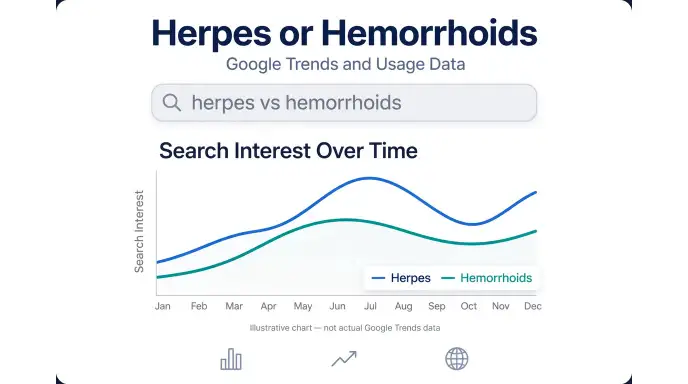
People search for herpes and hemorrhoids for different reasons. Some want to understand symptoms, while others want information about treatment, testing, prevention, or spelling.
Why People Search for Herpes
Common search topics include:
- Herpes symptoms and early signs.
- Oral herpes versus genital herpes.
- Herpes testing and treatment.
- How herpes spreads.
- How to tell if a sore needs medical attention.
These searches often relate to sexual health, skin symptoms, and concerns about infection.
Why People Search for Hemorrhoids
Common search topics include:
- Hemorrhoid symptoms and causes.
- Internal versus external hemorrhoids.
- Home care for piles.
- Hemorrhoid creams and medical treatments.
- Rectal bleeding and anal discomfort.
These searches often relate to bowel health, constipation, pain, and self,care.
Differences by Country
Search wording can vary by region. American users are more likely to encounter the spelling hemorrhoids, while British users may see haemorrhoids or the everyday term piles. The word herpes remains the same in both regions.
Google Trends reports relative search interest over time and across locations. Its scores are normalized, so they do not represent exact search counts. A higher score also does not automatically mean that a condition is more common.
Without a current, region,specific Trends comparison, it would be misleading to claim exact popularity rankings or search volumes for these terms.
For an , article, compare the American and British spellings separately and review related queries in Google Trends or a keyword research tool before publishing numerical claims.
Comparison Table: Herpes vs. Hemorrhoids
| Point of comparison | Herpes | Hemorrhoids |
| Meaning | Viral infection | Swollen blood vessels |
| Cause | Herpes simplex virus | Swelling of veins around the anus or rectum |
| Main symptoms | Blisters, sores, tingling, or burning | Lumps, itching, pain, or bleeding |
| Affected areas | Mouth, genitals, or anus | Anus or lower rectum |
| Spread to others | Can spread through direct contact | Not contagious |
| Diagnosis | Examination and, when appropriate, laboratory tests | Medical examination and sometimes further tests |
| Treatment | Antiviral medicines | Self,care, medicines, or procedures |
| American spelling | Herpes; hemorrhoids | Hemorrhoids |
| British spelling | Herpes; haemorrhoids | Haemorrhoids or piles |
Important: These conditions cannot always be distinguished by symptoms alone. A healthcare professional can assess the affected area and recommend suitable tests. Herpes sores may be tested with a swab, while rectal bleeding may need further assessment to identify its cause.
Frequently Asked Questions
1. What is the main difference between herpes and hemorrhoids?
Herpes is a viral infection that can cause blisters or sores. Hemorrhoids are swollen blood vessels that may cause itching, lumps, pain, or bleeding.
2. Can hemorrhoids look like herpes?
Some symptoms may overlap, but the conditions have different causes. A healthcare professional can examine the area and determine if testing is needed.
3. Can herpes cause anal pain?
Yes. Anal herpes can cause painful sores, burning, or discomfort around the anus. Other conditions can cause similar symptoms, so medical assessment may help confirm the cause.
4. Does rectal bleeding always mean hemorrhoids?
No. Hemorrhoids can cause rectal bleeding, but other conditions can also cause it. Seek medical advice, especially if the bleeding is repeated, heavy, or unexplained.
5. Are herpes and hemorrhoids contagious?
Herpes can spread through direct contact with infected skin or sores, including sexual contact. Hemorrhoids do not spread from person to person.
6. Can herpes and hemorrhoids occur at the same time?
Yes. A person can have both conditions because they have different causes. A doctor can assess symptoms and recommend treatment for each condition if needed.
7. Which spelling is correct: hemorrhoids or haemorrhoids?
Both are correct. Hemorrhoids is the standard American spelling, while haemorrhoids is the standard British spelling. Both refer to the same condition.
Conclusion
Herpes and hemorrhoids are different conditions, even though both can cause discomfort around the anal area. Herpes is a viral infection, while hemorrhoids are swollen blood vessels in or around the anus and lower rectum. Understanding this difference can help readers learn the right medical terms and avoid common mistakes.
Herpes may cause blisters, sores, burning, or tingling. Hemorrhoids may cause itching, swelling, lumps, or bright red blood during bowel movements. However, these signs can overlap with other health problems, so symptoms alone cannot always provide a clear answer.
The correct word depends on the condition you want to describe. Use herpes when referring to the viral infection. Choose hemorrhoids for American English or haemorrhoids for British English when discussing swollen blood vessels. The British term piles is also common in everyday speech.
For health websites and educational articles, clear definitions and accurate medical information matter more than keyword repetition. If someone has new sores, persistent pain, or unexplained rectal bleeding, professional medical advice is the safest next step. Correct spelling helps readers understand the topic, but correct information helps them make informed decisions about their health.
Explore More Grammar Tips!

Hi, I’m Olivia Bennett, an English grammar and spelling content writer. I enjoy exploring confusing words, spelling differences, and everyday language questions. My goal is to share clear, simple, and helpful explanations that make English easier to understand.




3 thoughts on “Herpes or Hemorrhoids: Meaning, Symptoms, and Key Differences”