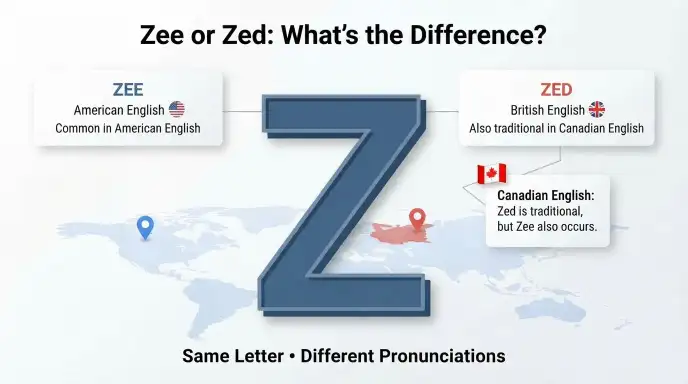
Zee and zed are both correct names for the letter Z, but “zee” is standard in American English while “zed” is standard in British English and many other varieties of English. The difference is mainly regional, not grammatical.
People often search for zee or zed because they hear different pronunciations in movies, classrooms, songs, international workplaces, or conversations with English speakers from different countries. Both forms refer to exactly the same letter, but the pronunciation can reveal which variety of English a speaker uses.
American English normally says zee, while British English says zed. Canadian English commonly uses zed, although zee can also occur in some contexts. Australian and New Zealand English generally use zed.
This guide explains where the two names came from, how they differ across English-speaking countries, which form to use in different settings, and why the choice matters when spelling words aloud.
Featured Snippet + AI Overview
Zee and zed are two pronunciations of the letter Z. “Zee” is the standard American English pronunciation, while “zed” is standard in British English and many other English varieties. The letter itself does not change. The difference is simply the regional name used when speaking about Z.
Zee or Zed – Quick Answer
The answer is simple:
- Zee = American English
- Zed = British English
- Zed is also common in Canada, Australia, and New Zealand.
- Both refer to the letter Z.
- Neither pronunciation changes the spelling of words containing Z.
Examples
An American speaker might say:
“Z as in zebra. Zee.”
A British speaker might say:
“Z as in zebra. Zed.”
When Spelling a Word Aloud
Suppose someone asks you to spell amazing.
An American speaker may say:
A-M-A-Z-I-N-G, ending with “zee.”
A British speaker may say:
A-M-A-Z-E-D? No. The letter is “zed,” but the spelling remains Z.
The important point is that zee and zed are names for the same letter.
What Does Zee or Zed Mean?
What Does “Zee” Mean?
Zee is the spoken name of the letter Z in American English.
It is not a separate letter.
For example:
“The word ends with Z.”
An American speaker would normally pronounce the letter name as zee.
What Does “Zed” Mean?
Zed is the spoken name of the letter Z in British English and several other English varieties.
For example:
“The alphabet ends with zed.”
Again, zed does not represent a different letter. It is simply another name for Z.
Why Are There Two Names?
English developed different pronunciation traditions in different regions.
American English standardized zee, while British English retained zed.
This difference is similar to other regional differences in English. However, unlike color/colour, the difference here is in spoken pronunciation, not spelling.
Is Zee a Word?
Yes. Zee is a dictionary-recognized word meaning the letter Z, especially in American English.
Is Zed a Word?
Yes. Zed is also a standard word meaning the letter Z, especially in British English and other varieties.
The Origin of Zee or Zed
The two names have different historical paths.
Origin of “Zed”
Zed is the older form in English.
It developed through French influence. The French name for the letter Z is pronounced similarly to zed, and English adopted a related form.
The spelling and pronunciation became established in British English.
Origin of “Zee”
Zee developed later as an English pronunciation that became standard in American English.
One important reason for its spread was the desire for a more regular pattern among English letter names.
Many English letter names have a long ee sound:
- B
- C
- D
- E
- G
- P
- T
- V
- Z
The pronunciation zee fits that pattern more closely than zed.
When Did “Zee” Become Common?
The use of zee became established in American English over time, especially during the development of American English as a distinct regional variety.
Today, zee is strongly associated with American English.
Why Did Both Forms Survive?
English developed across many regions. Different pronunciation traditions remained in use rather than one form replacing the other everywhere.
As a result:
American English → zee
British English → zed
Both are now established standard forms.
British English vs American English
The main regional distinction is straightforward.
| British English | American English | Example |
| zed | zee | The final letter is Z. |
| Z is pronounced “zed” | Z is pronounced “zee” | Spell the word aloud. |
| British alphabet | American alphabet | Both contain the same 26 letters. |
British English
In British English, the letter is normally called zed.
Example:
“Zed comes after Y.”
American English
In American English, the letter is normally called zee.
Example:
“Zee is the final letter of the alphabet.”
Does the Spelling of Words Change?
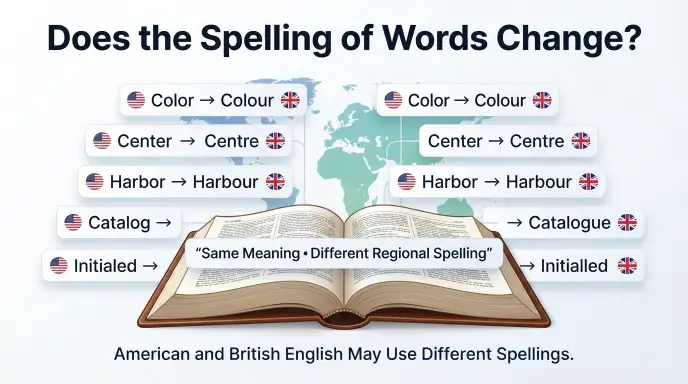
No.
The pronunciation of the letter name does not change how words containing Z are spelled.
For example, zebra is spelled the same in both varieties.
The difference is only in how speakers name the letter when speaking.
Canadian English
Canadian English has its own pattern: zed is generally the traditional pronunciation, while zee is also heard in some contexts.
The choice may vary based on the speaker’s region, age, personal preference, and exposure to American media.
Australian English
Australian English generally uses zed.
New Zealand English
New Zealand English also generally uses zed.
Which Version Should You Use?
Your choice should normally match the English variety you are speaking.
United States
Use zee.
This is the standard American pronunciation.
United Kingdom
Use zed.
This is the standard British pronunciation.
Canada
Zed is generally the traditional Canadian form, although you may hear zee as well.
Australia
Use zed in standard Australian English.
New Zealand
Zed is generally used.
International English
For international communication, either pronunciation can be understood.
However, matching your audience can make communication smoother.
Academic Writing
Written academic English normally uses the letter Z rather than spelling out its spoken name.
If pronunciation matters, identify the regional form clearly.
For example:
In American English, the letter Z is pronounced “zee.”
Business Writing
In formal business writing, simply write Z unless you are discussing pronunciation.
If a spoken presentation includes the letter name, use the form natural to your audience.
Common Mistakes
Mistake 1: Thinking Zee and Zed Are Different Letters
Incorrect:
Zee and zed are two different letters.
Correct:
Zee and zed are two names for the same letter, Z.
The alphabet has one letter Z, but English varieties use different names for it.
Mistake 2: Assuming Zed Is Wrong
Incorrect:
“Zed” is an incorrect way to say Z.
Correct:
“Zed” is the standard British English name for Z.
Mistake 3: Assuming Zee Is Wrong
Incorrect:
Americans pronounce the letter incorrectly when they say “zee.”
Correct:
“Zee” is the standard American English name for Z.
Mistake 4: Changing the Spelling of Words
The pronunciation difference does not mean that words containing Z should be spelled differently.
For example:
zebra
remains zebra in both American and British English.
Mistake 5: Using the Wrong Form for Your Audience
If you are teaching British English, using zee may sound unusual.
If you are teaching American English, using zed may sound unfamiliar.
Memory Tip
Think:
Zee = USA
Zed = UK and many Commonwealth varieties
Everyday Examples
In Emails
Please use the letter Z, pronounced “zed” in British English.
Business Writing
The product code ends with the letter Z.
In formal written communication, using Z avoids any pronunciation issue.
News Headlines
A written headline will normally use Z rather than zee or zed because the distinction is primarily spoken.
Blogs
If you are learning American English, you will usually hear the final letter called “zee.”
Social Media
“Do you say zee or zed?”
This question often appears in discussions about regional English.
Academic Writing
The letter Z is called “zee” in American English and “zed” in British English.
Daily Conversation
American English:
“What comes after Y?”
“Zee.”
British English:
“What comes after Y?”
“Zed.”
Zee or Zed – Google Trends & Modern Usage
Searches for zee or zed are usually driven by language learners, international communication, and curiosity about regional English.
People may search the phrase because they want to know:
- How Americans pronounce Z
- How British people pronounce Z
- if zee or zed is correct
- Why Americans say zee
- Why British speakers say zed
- Which pronunciation is used in Canada
- Which form to teach English learners
- if the two forms mean different things
Regional Usage
The broad pattern is:
| Region | Common Form |
| United States | Zee |
| United Kingdom | Zed |
| Canada | Mostly zed, with variation |
| Australia | Zed |
| New Zealand | Zed |
| International English | Depends on speaker and context |
These are general language-use patterns rather than absolute rules. Individual speakers may use a different form because of regional background, education, family language, or exposure to other varieties of English.
Modern Media Influence
Movies, television, music, online videos, and international education expose speakers to different English varieties.
As a result, someone who normally says zed may understand zee immediately, and vice versa.
This is especially common among multilingual English speakers.
Why Do People Search This Keyword?
The phrase is useful because the difference is easy to notice in spoken English.
A learner may know the alphabet perfectly but become confused when an American speaker says zee after learning British English, where zed is expected.
Quick Comparison Table
| Version | Meaning | Correct? | Region | Example |
| Zee | Name of the letter Z | Yes | Mainly American English | “Zee is the final letter.” |
| Zed | Name of the letter Z | Yes | British English and many other varieties | “Zed is the final letter.” |
| Z | The written letter | Yes | All English varieties | “The word contains Z.” |
Key Takeaways
- Zee and zed are both correct.
- Both are names for the letter Z.
- Zee is standard in American English.
- Zed is standard in British English.
- Canadian English commonly uses zed, but variation exists.
- Australian and New Zealand English generally use zed.
- The difference is pronunciation, not spelling.
- Words containing Z are spelled the same in both varieties.
- Choose the pronunciation that matches your audience and English variety.
FAQs About Zee or Zed
Is zee or zed correct?
Both zee and zed are correct names for the letter Z. American English normally uses zee, while British English uses zed. Other English-speaking countries may follow one form or show some variation. Neither pronunciation represents a different letter.
Do Americans say zee or zed?
Americans normally say zee when naming the letter Z. This is the standard American English pronunciation. You may still hear zed from people who learned or regularly use another variety of English.
Do British people say zee or zed?
British English normally uses zed for the letter Z. This is the standard form taught in British English. American media and international communication may expose British speakers to zee, but zed remains the usual British pronunciation.
Why do Americans say zee instead of zed?
The pronunciation zee developed as a standard form in American English. It also fits the pattern of several other English letter names that end with an “ee” sound. Over time, zee became the normal American pronunciation.
Is zed only used in British English?
No. Zed is strongly associated with British English, but it is also common in several other varieties, including Australian and New Zealand English. Canadian English generally uses zed as well, although Canadian speakers can also use zee.
Which is used in Canada, zee or zed?
Canadian English generally uses zed, but both forms can occur. Usage may vary among individual speakers. American media and cultural influence can make zee familiar to Canadians, even when zed remains the traditional Canadian pronunciation.
Is zee an American word?
Yes. Zee is the standard American English name for the letter Z. It is also understood outside the United States, especially because of international media and exposure to American English.
Does zee or zed change the alphabet?
No. The alphabet does not change. English has the same letter Z if a speaker calls it zee or zed. The difference is simply the pronunciation used for the letter’s name.
Should English learners learn zee or zed?
English learners should learn the form used by the English variety they are studying. American English learners should expect zee, while British English learners should expect zed. Understanding both forms is useful for international communication.
Why do some people say zed and others say zee?
English has several regional varieties, and pronunciation differences developed over time. Different English-speaking communities kept different names for Z. Today, zee is associated mainly with American English, while zed is common in British and several Commonwealth varieties.
Conclusion
Zee and zed are both correct names for the letter Z. The main difference is regional pronunciation. American English normally uses zee, while British English uses zed. Many other English varieties, including Australian and New Zealand English, also commonly use zed.
The distinction does not affect spelling. The letter is still written as Z, and words containing the letter do not change simply because a speaker uses a different name for it. Canadian English commonly uses zed, although zee can also be heard.
For English learners, the best approach is to follow the variety of English being studied or used. If your audience is American, zee will sound natural. If your audience uses British English, zed is the expected form. For international communication, knowing both forms prevents confusion.
Learn More Word Usage!

I’m Ethan Carter, a grammar-focused writer and English language enthusiast at SpellGrammar. I enjoy explaining confusing words, spelling differences, and grammar rules in clear, simple language. My goal is to help readers write with greater accuracy and confidence in everyday and professional English.








2 thoughts on “Zee or Zed: Meaning, Pronunciation, and Usage”