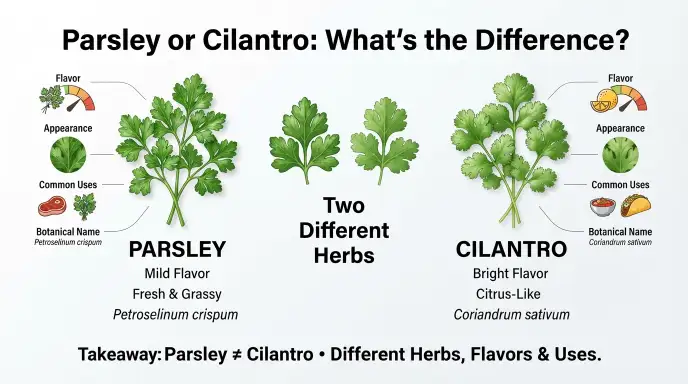
Parsley and cilantro are different herbs, although both are leafy green herbs often used to add fresh flavor and color to food. They can look similar at first, which is why people often search for “parsley or cilantro” when a recipe calls for one but they are unsure which herb they have.
The two herbs have different flavors, aromas, and common culinary uses. Parsley usually has a fresh, mild, slightly peppery flavor. Cilantro has a much stronger, brighter flavor that some people describe as citrusy or earthy. Some people also experience cilantro as having a soapy taste because of genetic differences in how certain flavor compounds are perceived.
The names can also cause confusion. In the United States, cilantro usually means the fresh leaves and stems of the coriander plant. In British English and many other countries, coriander may refer to the fresh herb as well as the plant’s seeds.
This guide explains the differences between parsley and cilantro, their meanings, origins, uses, common mistakes, and how to choose the right herb for cooking.
Parsley or Cilantro : Quick Answer
Parsley and cilantro are two different herbs. They may look alike, but they have different flavors and are used in different types of dishes.
- Parsley: Mild, fresh, grassy, and slightly peppery.
- Cilantro: Stronger, bright, citrusy, and distinctive.
- Parsley: Common in Mediterranean, European, and Middle Eastern cooking.
- Cilantro: Common in Mexican, Indian, Thai, Vietnamese, and other cuisines.
- Cilantro is also called coriander in many countries.
Simple Example
Add chopped parsley to the pasta before serving.
Add fresh cilantro to the salsa.
You should not automatically replace one with the other because their flavors are quite different.
Definition and Meaning of Parsley or Cilantro
What Is Parsley?
Parsley is a green herb from the Petroselinum crispum plant. It is widely used as a seasoning, garnish, and fresh ingredient.
Common types include:
- Flat leaf parsley
- Curly parsley
- Parsley root
Flat leaf parsley is often preferred for cooking because it has a stronger flavor and is easy to chop.
Parsley can be used in:
- Salads
- Soups
- Pasta
- Sauces
- Meat dishes
- Vegetable dishes
- Herb mixtures
What Is Cilantro?
Cilantro is the fresh leafy part of the Coriandrum sativum plant.
It is widely used in:
- Salsa
- Guacamole
- Tacos
- Curries
- Chutneys
- Soups
- Noodle dishes
- Rice dishes
The leaves and tender stems can both be used.
Cilantro vs Coriander
This is an important naming difference.
In American English, cilantro usually refers to the fresh leaves and stems, while coriander usually refers to the dried seeds.
In British English, coriander commonly refers to the fresh herb as well as the seeds.
So a recipe from the UK may say fresh coriander where an American recipe says fresh cilantro.
The Origin of Parsley or Cilantro
Parsley and cilantro have different histories and origins.
Origin of Parsley
The English word parsley comes from older forms of the word that trace back to Greek petroselinon, referring to rock parsley.
The herb has a long history in European and Mediterranean food traditions. It has also been used traditionally as a culinary and medicinal plant.
Today, parsley is grown and used around the world.
Origin of Cilantro
The word cilantro comes from Spanish and is related to the Latin and Greek history of the word coriander.
The plant itself, Coriandrum sativum, has been cultivated for thousands of years and has a long history across regions of Europe, North Africa, and Asia.
The difference between cilantro and coriander is largely a matter of regional terminology.
Why Do People Use Different Names?
The naming difference developed through different language and culinary traditions.
In the United States:
cilantro = fresh leaves and stems
coriander = seeds
In British English:
coriander = fresh leaves and seeds, depending on context
This difference can create confusion when people use international recipes.
British English vs American English Spelling
Unlike words such as colour and color, parsley does not have a major British American spelling difference.
The bigger issue involves the word cilantro and its alternative name coriander.
| British English | American English | Example |
| parsley | parsley | Add fresh parsley to the soup. |
| coriander | cilantro | Add fresh coriander/cilantro to the salsa. |
| coriander seeds | coriander seeds | Toast the coriander seeds. |
| flat leaf parsley | flat leaf parsley | Chop the flat leaf parsley. |
Important Regional Difference
An American recipe may say:
Add fresh cilantro.
A British recipe may say:
Add fresh coriander.
Both can refer to the fresh leaves of the same plant.
The context is important because coriander seeds are different from fresh coriander leaves.
Which Herb Should You Use?
The best choice depends on the recipe and the flavor you want.
For American Recipes
If a recipe says cilantro, use the fresh leaves and tender stems of the coriander plant.
If it says parsley, use parsley.
For British Recipes
If a recipe says fresh coriander, it usually means the fresh leaves of the coriander plant.
If it says parsley, use parsley.
For Mexican Food
Cilantro is common in dishes such as:
- Salsa
- Guacamole
- Tacos
- Pico de gallo
For Mediterranean Food
Parsley is common in dishes such as:
- Tabbouleh
- Salads
- Pasta
- Fish dishes
- Sauces
For Asian Cooking
Cilantro is common in many South and Southeast Asian dishes.
Parsley is also used in some Asian recipes, but it generally has a different culinary role.
For International Writing
If your audience may be unfamiliar with the term cilantro, you can clarify it:
Fresh cilantro, also known as fresh coriander, adds a bright flavor to the dish.
This avoids regional confusion.
Common Mistakes with Parsley or Cilantro
Mistake 1: Thinking They Are the Same Herb
Incorrect:
Parsley and cilantro are two names for the same herb.
Correct:
Parsley and cilantro are different herbs.
Their leaves can look similar, but their flavors are different.
Mistake 2: Using Cilantro Instead of Parsley
A recipe that needs parsley may not taste the same if you replace it with cilantro.
Cilantro has a much stronger and more distinctive flavor.
Mistake 3: Confusing Cilantro With Coriander Seeds
Fresh cilantro and coriander seeds come from the same plant, but they are different ingredients.
Fresh cilantro: leafy herb.
Coriander seeds: dried seeds with a warm, spicy flavor.
Mistake 4: Assuming Everyone Tastes Cilantro the Same Way
Some people experience cilantro as having a strong or soapy taste. Research has linked this perception partly to genetic differences involving smell receptors.
That does not mean cilantro is objectively “soapy.” Taste perception varies from person to person.
Memory Tip
Think:
Parsley = mild and grassy
Cilantro = bright and distinctive
Parsley or Cilantro in Everyday Examples
In Emails
Please add fresh parsley to the shopping list.
Please check if the recipe requires cilantro or parsley.
In Business Writing
The dish is finished with freshly chopped parsley.
In News Writing
The chef added fresh cilantro to the traditional salsa.
In Blogs
Fresh parsley gives the salad a clean, herbal flavor.
On Social Media
“Fresh cilantro makes this salsa taste even better!”
In Formal Writing
Fresh herbs such as parsley and cilantro are widely used in different culinary traditions.
In Daily Conversation
“Do we need parsley or cilantro for this recipe?”
“The recipe calls for cilantro.”
Parsley or Cilantro : Google Trends & Usage Data
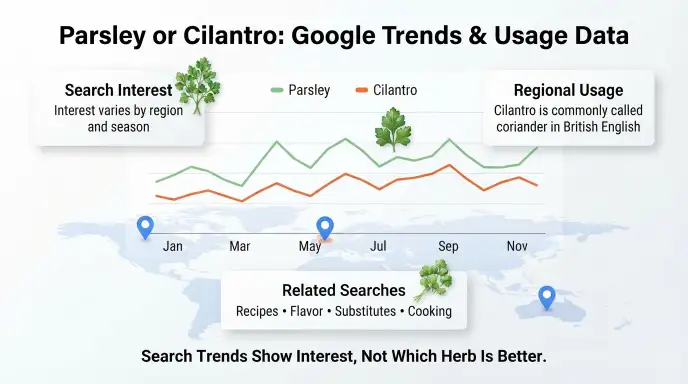
Search interest in parsley and cilantro can vary by country, cuisine, and recipe type.
People may search these terms because they want to know:
- How parsley differs from cilantro
- if cilantro and coriander are the same
- What parsley tastes like
- What cilantro tastes like
- if one herb can replace the other
- Which herb belongs in a particular recipe
- Why cilantro tastes soapy to some people
- How to identify the herbs at the grocery store
Search behavior can also change with food trends and popular recipes.
For example, searches for cilantro may be linked to salsa, tacos, guacamole, curry, and Asian recipes. Searches for parsley may be linked to pasta, salads, sauces, soups, and Mediterranean dishes.
Exact Google Trends popularity depends on the country, time period, and search category selected. Therefore, broad usage patterns should not be treated as exact search volume statistics.
Quick Comparison Table
| Feature | Parsley | Cilantro |
| Plant | Petroselinum crispum | Coriandrum sativum |
| Flavor | Mild, fresh, grassy | Bright, citrusy, distinctive |
| Common use | Salads, pasta, soups, sauces | Salsa, tacos, curries, chutneys |
| Common varieties | Flat leaf, curly | Mainly fresh leafy coriander |
| American name | Parsley | Cilantro |
| British name | Parsley | Coriander |
| Seeds | Parsley seeds are less common in everyday cooking | Coriander seeds are widely used |
| Can they be substituted? | Usually not a direct flavor match | Usually not a direct flavor match |
Key Takeaways
- Parsley and cilantro are different herbs.
- Parsley usually has a mild, grassy flavor.
- Cilantro has a stronger, brighter flavor.
- American English commonly uses cilantro for the fresh herb.
- British English commonly uses coriander for the fresh herb.
- Coriander seeds come from the same plant as cilantro.
- Parsley and cilantro are not always good substitutes for each other.
- Always check the recipe’s regional terminology.
FAQs About Parsley or Cilantro
Are parsley and cilantro the same thing?
No. Parsley and cilantro come from different plants and have different flavors. Parsley is usually mild and grassy, while cilantro has a stronger, brighter flavor. They are both common culinary herbs, but they are used differently in many recipes.
Can I use parsley instead of cilantro?
You can, but the flavor will change. Parsley has a milder, more herbal taste and does not provide the distinctive flavor of cilantro. If cilantro is an important part of a salsa, curry, or other dish, parsley may not provide the same result.
Can I use cilantro instead of parsley?
Cilantro can technically be used in some dishes, but it may change the flavor significantly. Its taste is stronger and more distinctive than parsley. If a recipe calls for parsley as a mild garnish or herb, cilantro may overpower the other ingredients.
Is cilantro the same as coriander?
Cilantro and coriander come from the same plant. In American English, cilantro usually means the fresh leaves and stems, while coriander usually means the dried seeds. In British English, coriander commonly refers to the fresh herb as well.
Why does cilantro taste like soap to some people?
Some people perceive cilantro as having a soapy taste because of genetic differences in smell receptors. These differences can affect how certain aroma compounds in cilantro are perceived. As a result, people can have very different reactions to the same herb.
Which is stronger, parsley or cilantro?
Cilantro generally has a stronger and more distinctive flavor than parsley. Parsley tends to taste mild, fresh, and grassy. Cilantro has a bright flavor that can strongly affect a dish, so the two herbs should not always be treated as interchangeable.
Which herb is used in salsa?
Cilantro is commonly used in salsa, especially in Mexican style recipes. Its bright and distinctive flavor pairs well with tomatoes, onions, peppers, and lime. Parsley can be used in some variations, but it gives the salsa a different flavor.
Conclusion
Parsley and cilantro are different herbs with different flavors, appearances, and culinary uses. Parsley usually has a mild, fresh, grassy flavor, while cilantro has a stronger and more distinctive taste. Both can add freshness to food, but they are not usually direct substitutes for each other.
The naming of cilantro creates another source of confusion. American English commonly uses cilantro for the fresh leaves of the coriander plant, while British English often uses coriander for the same fresh herb. Coriander seeds come from the same plant but are a separate ingredient with a different flavor.
When following a recipe, check the type of English being used and look at the context. If the recipe says fresh coriander, it may mean what American recipes call cilantro. If it asks for parsley, use parsley unless the recipe specifically suggests another substitute.
Learn More Grammar!

I’m Ethan Carter, a grammar-focused writer and English language enthusiast at SpellGrammar. I enjoy explaining confusing words, spelling differences, and grammar rules in clear, simple language. My goal is to help readers write with greater accuracy and confidence in everyday and professional English.








2 thoughts on “Parsley vs Cilantro: Key Differences Explained ”