Norovirus and rotavirus are two viruses that cause stomach infections, vomiting, and diarrhea, but they differ in the people they affect, how long symptoms last, and how they can be prevented. Norovirus commonly affects people of all ages, while rotavirus is especially dangerous for babies and young children.
Both infections spread easily and can cause dehydration, particularly when a person loses large amounts of fluid through vomiting or diarrhea. Although their symptoms overlap, knowing the differences can help you understand each infection and recognize when medical care may be necessary.
People often search for norovirus or rotavirus because both viruses cause similar stomach problems. However, they are different viruses, and their prevention methods are not exactly the same. A vaccine is available to protect children against rotavirus, while norovirus prevention mainly depends on good hygiene and careful food handling.
This guide explains the meanings, symptoms, origins, spelling differences, and everyday uses of both terms. It also answers common questions to help you understand these two infections clearly.
Norovirus or Rotavirus – Quick Answer
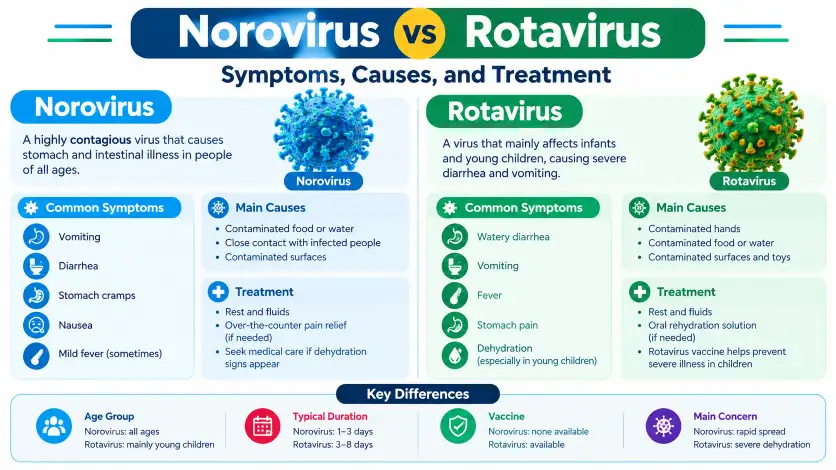
Norovirus and rotavirus are different viruses that cause gastroenteritis, an infection involving the stomach and intestines. Norovirus affects people of all ages, while rotavirus mainly causes severe diarrhea in infants and young children.
- Norovirus: Often causes sudden vomiting, watery diarrhea, nausea, and stomach cramps. Symptoms usually last one to three days.
- Rotavirus: Commonly causes watery diarrhea, vomiting, fever, and stomach pain in young children. Symptoms can last three to eight days.
Both viruses can cause dehydration. Drinking enough fluids is important, and severe symptoms may require medical attention. Rotavirus vaccines help protect young children against severe infection.
Definition and Meaning of Norovirus and Rotavirus
What Does Norovirus Mean?
Norovirus is a highly contagious virus that causes inflammation of the stomach and intestines. This condition is known as acute gastroenteritis.
People infected with norovirus may experience vomiting, diarrhea, nausea, and abdominal cramps. Some people also develop a mild fever, headache, or body aches.
The virus can spread through contaminated food or water, close contact with an infected person, and contaminated surfaces. Outbreaks often occur in places where people gather, such as schools, hospitals, restaurants, and cruise ships.
Symptoms usually begin 12 to 48 hours after exposure. Most people recover within one to three days, although dehydration can become a concern.
What Does Rotavirus Mean?
Rotavirus is a contagious virus that infects the digestive system and can cause severe diarrhea, particularly in babies and young children.
Common symptoms include watery diarrhea, vomiting, fever, and stomach pain. Young children may lose fluids quickly, making dehydration a serious risk.
The infection often spreads through contaminated hands, surfaces, food, or objects. Children can become infected when they touch contaminated items and then put their hands in their mouths.
Symptoms generally begin about two days after exposure and may continue for three to eight days. Vaccination is an important way to protect children against severe rotavirus disease.
The Origin of Norovirus and Rotavirus
Origin of Norovirus
The name norovirus is associated with Norwalk, Ohio, where an outbreak of gastrointestinal illness occurred in 1968. Scientists later identified the virus responsible for this type of illness.
The virus was initially associated with the name Norwalk virus. The name norovirus eventually became the commonly used term for the virus group.
Today, norovirus is recognized as a major cause of acute gastroenteritis worldwide.
Origin of Rotavirus
The word rotavirus comes from the Latin word rota, meaning “wheel.” Scientists chose this name because the virus has a wheel-like appearance when viewed under an electron microscope.
Researchers identified rotavirus in the 1970s while studying intestinal infections in children.
The name describes the virus’s appearance rather than the symptoms it causes. Rotavirus is now known as an important cause of severe diarrhea among young children.
British English vs American English Spelling
The words norovirus and rotavirus are spelled the same way in British and American English. Neither word has a separate standard British or American spelling.
However, related medical terms may differ between the two varieties of English.
| British English | American English |
| Norovirus | Norovirus |
| Rotavirus | Rotavirus |
| Diarrhoea | Diarrhea |
| Paediatric | Pediatric |
| Hospitalisation | Hospitalization |
| Faeces | Feces |
These differences do not change the meanings of norovirus or rotavirus. They simply reflect spelling conventions used in different regions.
Which Term Should You Use?
Choose norovirus when referring to the virus commonly associated with sudden outbreaks of vomiting and diarrhea among people of different ages.
Use rotavirus when discussing the virus that can cause severe diarrhea, especially in babies and young children.
Your choice depends on the infection you are describing, not on if you are writing in British or American English.
For example:
- A news report about an outbreak of vomiting among adults may refer to norovirus.
- A medical article discussing childhood vaccination may refer to rotavirus.
- A school health guide may mention both viruses when explaining how stomach infections spread.
When writing for a British audience, you may use diarrhoea. For an American audience, diarrhea is the usual spelling. The virus names remain unchanged.
Common Mistakes When Using Norovirus and Rotavirus
1. Treating Both Viruses as the Same
Although both viruses cause gastroenteritis, they are different infections. Their typical age groups, symptom patterns, and prevention methods differ.
2. Assuming Rotavirus Only Affects Babies
Rotavirus is especially important in young children, but people of other ages can also become infected. Previous exposure may provide some protection against severe illness.
3. Believing Norovirus Only Spreads Through Food
Contaminated food is one possible source, but norovirus can also spread through close contact with an infected person and contaminated surfaces.
4. Assuming Antibiotics Cure Both Infections
Antibiotics treat certain bacterial infections, not viruses. Norovirus and rotavirus infections usually require supportive care, such as replacing lost fluids.
5. Ignoring Dehydration
Repeated vomiting and diarrhea can cause dehydration. Warning signs may include reduced urination, a dry mouth, dizziness, unusual sleepiness, or fewer wet diapers in babies.
Seek medical advice promptly if dehydration is suspected, particularly in infants, older adults, or people with weakened immune systems.
Everyday Examples of Norovirus and Rotavirus
These examples show how the two terms are used in ordinary writing.
Example 1: Several passengers developed vomiting and diarrhea after a norovirus outbreak on a cruise ship.
Example 2: The pediatrician explained how rotavirus vaccination helps protect babies from severe diarrhea.
Example 3: Good handwashing can help reduce the spread of norovirus in schools and workplaces.
Example 4: Parents should learn the warning signs of dehydration when their child has a rotavirus infection.
Example 5: Both norovirus and rotavirus can cause gastroenteritis, but they are caused by different viruses.
Example 6: A public health guide explained how contaminated surfaces can contribute to the spread of stomach infections.
Example 7: The doctor recommended fluids and careful monitoring for a child experiencing vomiting and diarrhea.
Norovirus or Rotavirus: Usage and Search Trends
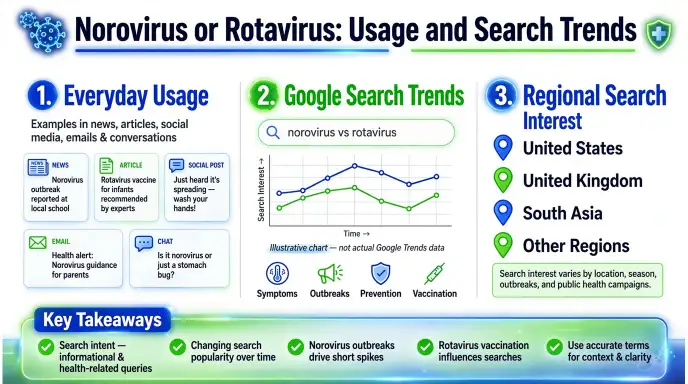
People search for both terms when trying to understand stomach infections, compare symptoms, or learn how to protect their families.
Search interest may change during outbreaks, seasonal increases in illness, public health announcements, and vaccination campaigns. However, search popularity alone does not establish how common either infection is.
Norovirus is widely associated with outbreaks among people of different ages. Rotavirus receives particular attention in discussions of infant health, childhood diarrhea, and vaccination.
Exact Google Trends comparisons depend on the selected country, date range, and search category. Without checking a specific live comparison, it would be misleading to claim that one term receives a particular number or percentage of searches.
For educational writing, explain the medical differences clearly rather than assuming the more frequently searched term is necessarily the more serious infection.
Norovirus vs Rotavirus: Key Differences
| Feature | Norovirus | Rotavirus |
| Type | Virus | Virus |
| Main illness | Acute gastroenteritis | Acute gastroenteritis |
| Common age group | All ages | Mainly infants and young children |
| Common symptoms | Vomiting, diarrhea, nausea, cramps | Diarrhea, vomiting, fever, stomach pain |
| Typical symptom onset | 12–48 hours after exposure | About 2 days after exposure |
| Usual symptom duration | 1–3 days | 3–8 days |
| Vaccine | No routinely available licensed vaccine | Vaccines are available |
| Main concern | Dehydration and rapid spread | Dehydration, particularly in young children |
| Treatment | Supportive care and fluid replacement | Supportive care and fluid replacement |
The timing and duration listed above are typical patterns, not guarantees. Symptoms vary from person to person.
Frequently Asked Questions
1. Are norovirus and rotavirus the same thing?
No. They are different viruses that can both cause gastroenteritis. Their symptoms overlap, but rotavirus is particularly important in young children.
2. Which is worse, norovirus or rotavirus?
Neither is always worse. Norovirus can cause severe illness and dehydration, while rotavirus can cause serious dehydration in babies and young children. Severity depends on the person and the infection.
3. How long does norovirus last?
Most people recover from norovirus within one to three days. Symptoms can vary, and some people may continue shedding the virus after they feel better.
4. How long does rotavirus last?
Rotavirus symptoms commonly last three to eight days. Children may need medical attention if they cannot keep fluids down or show signs of dehydration.
5. Is there a vaccine for norovirus or rotavirus?
Rotavirus vaccines are available and help protect young children against severe disease. There is currently no routinely available licensed vaccine for norovirus.
6. Can adults get rotavirus?
Yes. Adults can become infected, although illness is often more severe in young children. Previous exposure may provide some protection against serious symptoms.
7. How can you prevent these infections?
Wash your hands thoroughly with soap and water, clean contaminated surfaces, handle food safely, and avoid preparing food for others while ill. Rotavirus vaccination also helps protect children.
8. When should someone seek medical care?
Seek medical advice if symptoms are severe, vomiting prevents fluid intake, diarrhea persists, or signs of dehydration develop. Get prompt medical help for a baby or young child who is unusually sleepy, urinates much less than usual, or cannot drink enough fluids.
Conclusion
Norovirus and rotavirus are two different viruses that cause stomach and intestinal infections. Both can lead to vomiting, diarrhea, stomach pain, and dehydration, but they differ in their typical patterns and prevention methods.
Norovirus affects people of all ages and often causes symptoms that resolve within one to three days. Rotavirus mainly affects babies and young children and may cause diarrhea lasting several days. Rotavirus vaccination helps protect children against severe illness, while careful hygiene, safe food handling, and cleaning contaminated surfaces help reduce the spread of both infections.
The terms also have different origins: norovirus is linked to Norwalk, Ohio, while rotavirus refers to the virus’s wheel-like appearance. Neither word changes spelling between British and American English.
Understanding these differences can help you use the terms accurately and recognize when an illness may require medical attention. Because both infections can cause dehydration, replacing lost fluids and watching for warning signs are especially important.
Explore More Grammar Tips!

Hi, I’m Olivia Bennett, an English grammar and spelling content writer. I enjoy exploring confusing words, spelling differences, and everyday language questions. My goal is to share clear, simple, and helpful explanations that make English easier to understand.







2 thoughts on “Norovirus vs Rotavirus: Symptoms, Causes, and Treatment”