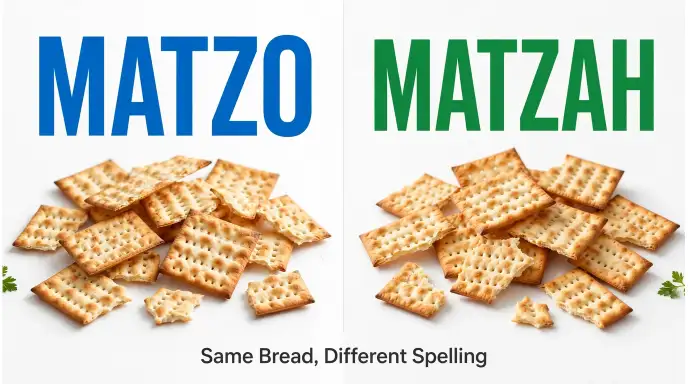
Matzo and matzah are both correct spellings for the same type of flat, unleavened bread eaten during the Jewish holiday of Passover. The main difference is spelling, not meaning. You may see matzo in many English texts, while matzah is also widely used, especially in Jewish writing and cultural settings.
Why are there two spellings for one food? The answer comes from the way Hebrew words are written in English. Hebrew sounds do not always match English letters in a single way. As a result, one Hebrew word can have several accepted English spellings.
People often search for “matzo or matzah” when they read a recipe, shop for Passover food, write about Jewish customs, or check which spelling is correct. Both forms can be used, but the best choice may depend on your audience, source, and writing style.
In this guide, you will learn what matzo and matzah mean, where the spellings come from, and how to use them in everyday writing. You will also see examples, a simple comparison table, and tips for choosing the right form.
Matzo or Matzah – Quick Answer
Matzo and matzah are both correct spellings of the same unleavened bread. There is no major difference in meaning between them.
- Matzo: A common English spelling, often seen in recipes, food labels, and general writing.
- Matzah: Another accepted spelling that closely reflects the Hebrew word and is common in Jewish religious and cultural writing.
Examples:
- We bought matzo for Passover.
- She served matzah with soup.
- The family ate matzo during the holiday.
Both spellings are correct. Choose one and use it consistently throughout your writing.
Definition and Meaning of Matzo or Matzah
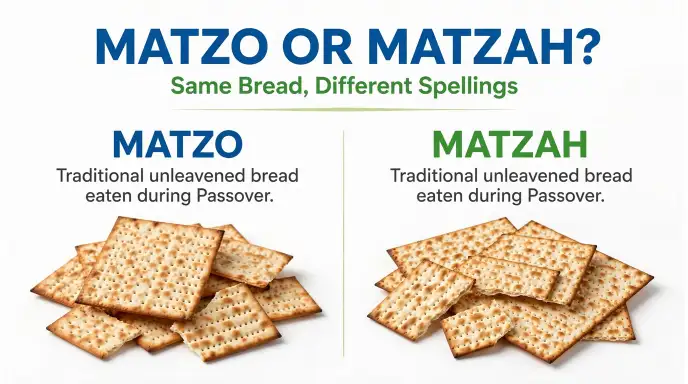
What Does Matzo Mean?
Matzo is a thin, crisp bread made without yeast or other rising agents. It is traditionally eaten during Passover, a Jewish holiday that remembers the Israelites’ escape from slavery in ancient Egypt.
The bread is made from flour and water. It is prepared and baked quickly so that the dough does not rise.
Matzo can be eaten plain or served with other foods. Some people use it in soups, snacks, or dishes made for Passover.
What Does Matzah Mean?
Matzah has the same meaning as matzo. It refers to the same type of unleavened bread.
The spelling matzah is often used in Jewish religious texts, holiday guides, and cultural writing. It also helps show the final sound of the Hebrew word more clearly for some readers.
For example:
- “Please place the matzah on the table.”
- “The store sells matzo before Passover.”
Both sentences refer to the same food.
Context and Usage
The two spellings appear in several settings:
- Food and recipes: Both forms appear in recipes and cooking guides.
- Religious writing: Matzah is often used when discussing Jewish customs and Passover traditions.
- Shopping: Food packages may use either spelling.
- Everyday conversation: People may use the form they know from family, community, or local stores.
Neither spelling is wrong. The important point is that both refer to unleavened bread associated with Jewish tradition.
The Origin of Matzo or Matzah
The word comes from Hebrew, where the bread is called matzah (מַצָּה). The plural form in Hebrew is matzot (מַצּוֹת), though English also uses forms such as matzos and matzahs.
The bread has a long history in Jewish life. During Passover, it recalls the biblical account of the Israelites leaving Egypt in haste, before their dough had time to rise.
The different English spellings developed as Hebrew words were written using English letters. This process is called transliteration. Transliteration represents words from one writing system in another, and there is often more than one way to do it.
In this case, matzah keeps the final h found in a common transliteration of the Hebrew word. Matzo is a shorter form that became established in English.
Over time, both spellings became widely understood. Today, writers can use either form, although a particular publication, community, or style guide may prefer one.
British English vs American English Spelling
Unlike words such as colour and color, matzo and matzah are not a simple British-versus-American spelling pair. Both forms are used in English-speaking countries, including the United States and the United Kingdom.
The choice often depends more on cultural context, personal preference, and the style of a publication than on national spelling rules.
| Feature | Matzo | Matzah |
| Meaning | Unleavened bread | Unleavened bread |
| Spelling | Shorter English form | Form closer to common Hebrew transliteration |
| Use in the US | Common in general writing and food contexts | Also common, especially in Jewish cultural writing |
| Use in the UK | Recognized and used | Recognized and used |
| Religious context | Acceptable | Often preferred by some writers and communities |
| Correctness | Correct | Correct |
Examples in Different English Contexts
American English: “We need to buy matzo for the Passover meal.”
British English: “The shop sells matzah before Passover.”
These examples show possible usage, not strict national rules. Either spelling can appear in American or British English.
Which Spelling Should You Use?
The best spelling depends on where and why you are writing.
For American Readers
Use matzo if it matches the wording used by your recipe source, store, newspaper, or publication. Matzah is also correct, especially in Jewish cultural and religious contexts.
For British and Commonwealth Readers
Both forms are understood. Check local food labels or the style guide of the publication you are writing for. Do not assume that one spelling is only British or only American.
For Jewish Religious or Cultural Writing
Matzah may be a suitable choice because it reflects a common transliteration of the Hebrew word. However, matzo is also established and should not be treated as an error.
For Websites, Blogs, and , Content
Choose one main spelling for the article and use it consistently in headings and body text. You can mention the alternative spelling once near the beginning to help readers who search for either form.
For example: “Matzo, also spelled matzah, is traditional unleavened bread eaten during Passover.”
This explains the spelling difference without repeating both words in every sentence.
Common Mistakes with Matzo or Matzah
Although both spellings are correct, writers sometimes make mistakes when using them.
1. Thinking One Spelling Is Wrong
Incorrect idea: “Matzah is wrong because matzo is the correct spelling.”
Correct: Both matzo and matzah are accepted English spellings. Neither is always the only correct choice.
2. Treating Them as Different Foods
Incorrect: “Matzo is one kind of bread, but matzah is another.”
Correct: Both words refer to the same traditional unleavened bread.
3. Switching Spellings Without a Reason
A writer might use matzo in one paragraph and matzah in the next. This is not necessarily a grammar error, but it can make the article feel inconsistent.
Better: Choose one spelling for the main text and use it throughout.
4. Assuming the Difference Is British vs American English
The pair does not follow the same national spelling pattern as centre and center.
Correct: Both spellings are used in the US and UK. Follow your chosen style guide or source.
5. Using the Wrong Plural Form
English uses plural forms such as matzos and matzahs. Hebrew also has the traditional plural matzot.
Examples:
- The store sells boxes of matzos.
- We bought several pieces of matzah.
- The traditional Hebrew plural is matzot.
When writing for a general audience, use the form that fits your sentence and keep it consistent.
Matzo or Matzah in Everyday Examples
These examples show how both spellings can work in common types of writing.
1. In Emails
“Could you please bring matzo for the Passover dinner?”
This is a clear, natural way to ask someone to bring the bread.
2. In News Articles
“Local shops have increased their supply of matzah ahead of Passover.”
The spelling matzah works well in a story about Jewish customs or holiday preparations.
3. On Social Media
“Our family is getting ready for Passover with homemade soup and matzo!”
This casual sentence uses the shorter spelling naturally.
4. In Formal Writing
“Matzo, also known as matzah, is an unleavened bread traditionally eaten during Passover.”
This sentence introduces both spellings and explains that they refer to the same food.
5. In Recipes
“Break the matzah into small pieces before adding it to the mixture.”
A recipe may use either spelling. The key is to follow the spelling used in the rest of the recipe.
6. In School Assignments
“Jewish families traditionally eat matzo during Passover.”
This sentence gives a simple explanation suitable for general educational writing.
7. In Product Descriptions
“This box contains crisp matzo made for Passover meals.”
A product description should ideally follow the spelling printed on the packaging.
Matzo or Matzah – Google Trends and Usage Data
People may search for matzo or matzah when looking for recipes, holiday foods, cultural information, or spelling advice. Search interest can vary by country, season, and the wording used by food brands or publications.
Why Search Interest May Change
Passover can affect searches for both spellings. In the weeks before and during the holiday, people may look for matzo products, recipes, meal ideas, and explanations of Jewish traditions.
Searches can also rise when people need to know if matzo and matzah mean the same thing.
Usage by Country
| Region | Possible usage pattern |
| United States | Both spellings appear in food, cultural, and religious contexts. |
| United Kingdom | Both forms are understood and used. |
| Canada | Both may appear in recipes, stores, and Jewish community resources. |
| Australia and New Zealand | Both forms can appear in food and cultural writing. |
| International audiences | Matzo and matzah are both useful terms to recognize. |
These are general usage observations, not measured rankings. Without checking current Google Trends data, it would be misleading to claim that one spelling receives a specific number of searches or is definitively more popular in a particular country.
How to Check Google Trends
To compare the terms, enter matzo and matzah in Google Trends. Set the location you want to study, choose a time range, and compare the results.
Keep in mind that Google Trends shows relative search interest, not the exact number of searches. The results may also change when you select a different country or period.
Which Keyword Should a Website Use?
For a grammar or word-usage article, use “matzo or matzah” in the title if that matches the reader’s question. Explain the meaning early, then use one main spelling consistently.
Mentioning the alternative spelling naturally can help readers understand both forms without making the article repetitive.
Matzo vs Matzah: Side-by-Side Comparison
| Point | Matzo | Matzah |
| Definition | Traditional unleavened bread | Traditional unleavened bread |
| Meaning | Same as matzah | Same as matzo |
| Origin | English form of a Hebrew word | Transliteration closer to the Hebrew form |
| Correct spelling? | Yes | Yes |
| Common context | General English, recipes, food labels | Jewish cultural writing, religious contexts, recipes |
| Regional limit | Not limited to one country | Not limited to one country |
| Best use | When preferred by your source or style guide | When preferred by your source or style guide |
The main difference is the spelling. The bread and its traditional meaning remain the same.
Frequently Asked Questions
1. Is matzo or matzah correct?
Both are correct. They are two English spellings for the same unleavened bread traditionally eaten during Passover.
2. Is matzah more correct than matzo?
No. Matzah reflects a common transliteration of the Hebrew word, while matzo is an established English form. The best choice depends on your context and style guide.
3. Is matzo American and matzah British?
No. The spellings are not divided strictly by country. Both are used in the United States, the United Kingdom, and other English-speaking regions.
4. What is the difference between matzo and matzah?
There is no basic difference in meaning. Both words refer to traditional unleavened bread associated with Passover.
5. Why does matzah have an “h” at the end?
The h appears in a common English transliteration of the Hebrew word. Different methods of representing Hebrew sounds in English have led to more than one accepted spelling.
6. What is the plural of matzo or matzah?
English plural forms include matzos and matzahs. The traditional Hebrew plural is matzot. The best form depends on the language and style of the text.
7. Which spelling should I use in an article?
Choose the spelling that fits your publication, audience, or source. Use it consistently, and explain the alternative spelling once if readers may be unfamiliar with it.
Conclusion: Matzo or Matzah?
Matzo and matzah are both correct spellings of the same traditional unleavened bread. The bread holds an important place in Jewish culture and is especially associated with Passover. Although the spellings look different, they do not describe two different foods.
The main reason for the difference is transliteration. When Hebrew words are written in English, more than one spelling may develop. Matzah follows a common way of representing the Hebrew word, while matzo is a well-established English form.
Neither spelling belongs exclusively to British or American English. Both appear in English-speaking countries, recipes, food labels, and cultural writing. If you are writing an article, recipe, school assignment, or email, choose the form that best matches your source and audience. Then use it consistently.
For , content, including both spellings naturally can help readers understand the difference and find the information they need. You do not need to repeat both words in every paragraph. A simple explanation near the start is enough.
Learn More About English Grammar!

Hi, I’m Olivia Bennett, an English grammar and spelling content writer. I enjoy exploring confusing words, spelling differences, and everyday language questions. My goal is to share clear, simple, and helpful explanations that make English easier to understand.





3 thoughts on “Matzo or Matzah: Meaning, Spelling, and Usage”